Memories Amidst Electronic Ruins
Memories Amidst Electronic Ruins
OVERVIEW
Through the vision of “future archaeology”, this project explores whether people in the future will be able to recognize artificial intelligence-generated disinformation and real news stories when they look at news in the 21st century.
The project aims to stimulate reflection on the complex relationship between information credibility, technological advances and cognitive biases, and to prompt us to re-examine the veracity of contemporary news.
Role: Visual Designer, Concept Director
Date: Summer 2024
Tool: TouchDesigner, Arduino, Open Processing
BACKGROUND
AI Misinformation
In recent years, AI language models have rapidly evolved from small to large-scale models, greatly improving the ability to generate content. Fake social media content generated by artificial intelligence has more than doubled in recent years compared to the previous year. These realistic fake contents utilise faces, voices, avatars and videos.
Changes in the pattern of news dissemination
Traditional news, created by journalists, is slower but more reliable. AI-driven news is faster via social media, but with less oversight, it risks spreading misinformation.

AI Fake News Rapidly Grows
In 2023 alone, the number of AI-generated deepfake videos circulating online more than doubled compared to the previous year. These fake contents, which often appear highly realistic, can be used with faces, voices, avatars, and videos. This rise of AI in journalism has led to an exponential increase in the proliferation of fake news.

RESEARCH
Public AI LITERACY is low
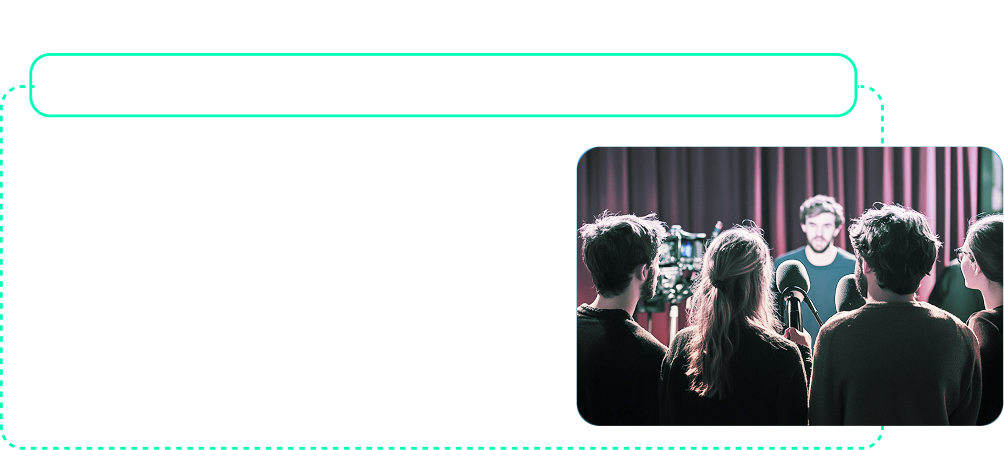
This questionnaire aims to explore the public's ability to recognize AI-generated fake news and reveal people's unconsciousness when confronted with such false information, thereby reflecting society's inability to recognize it.



Overconfidence in Detecting AI-Generated Fake News
Most of the participants in the questionnaire were intellectuals with bachelor's degrees or higher, and more than 50% of them were very confident in their ability to recognize fake news from artificial intelligence. So we ran a series of tests. It turns out only 19.51% of them can correctly recognize fake news generated by AI.
CONCEPT FORMATION
Triggering AI News via E-Waste Magnifier
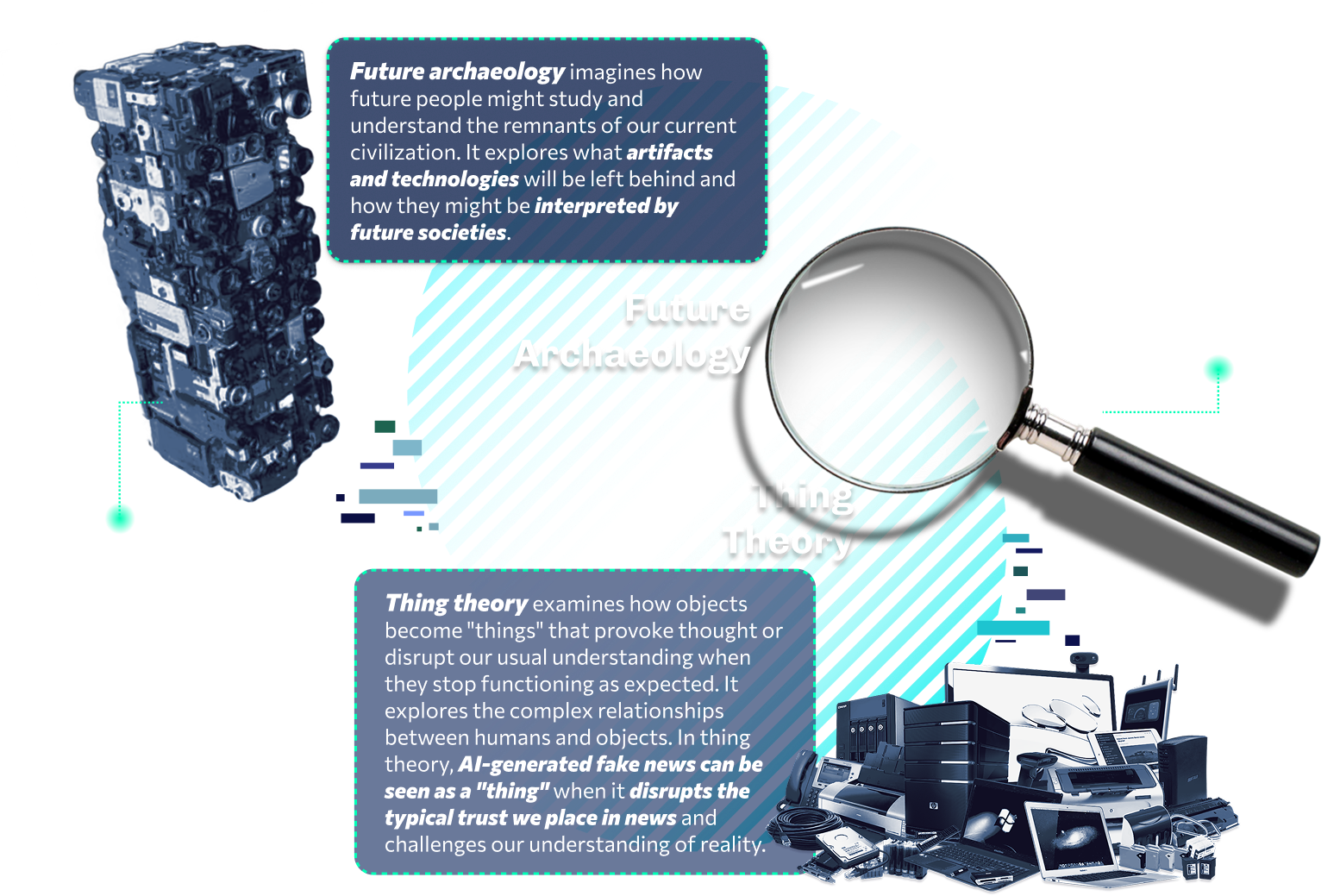
Future archaeology imagines how future people might study and understand the remnants of our current civilization. It explores what artifacts and technologies will be left behind and how they might be interpreted by future societies. Thing Theory examines how news media are more than just tools—they have meaning, history, and influence. By combining these two, our project delve into how future societies might interpret AI-generated fake news and their cultural significance.
INTERACTION LOGIC
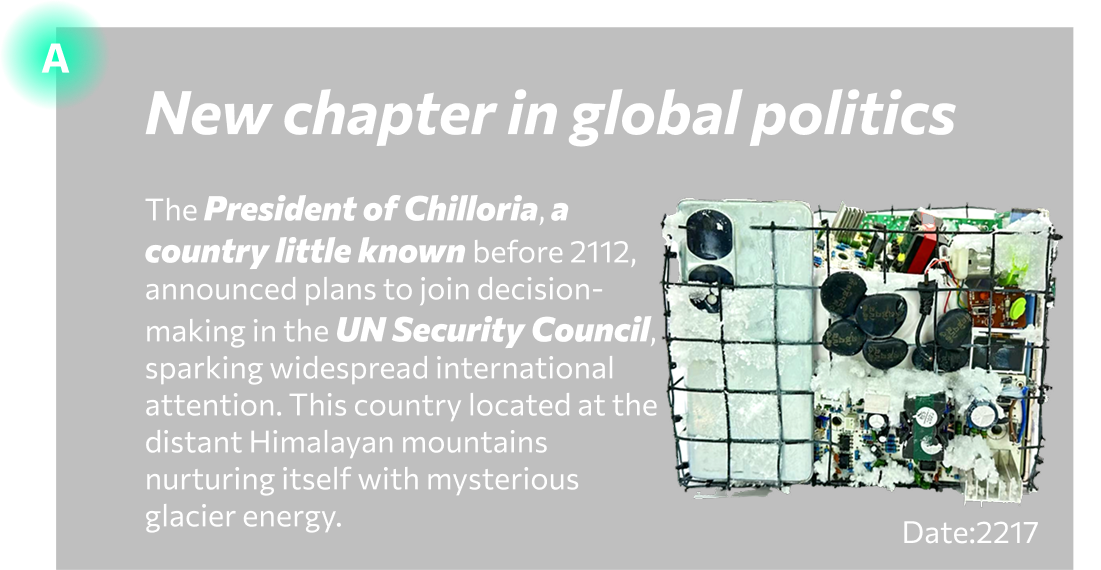
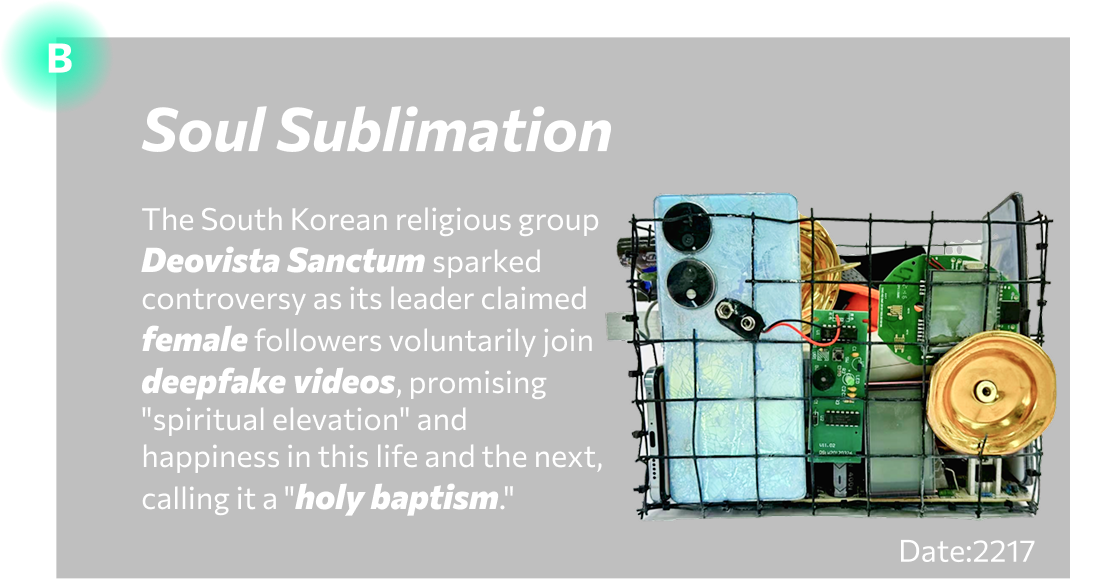
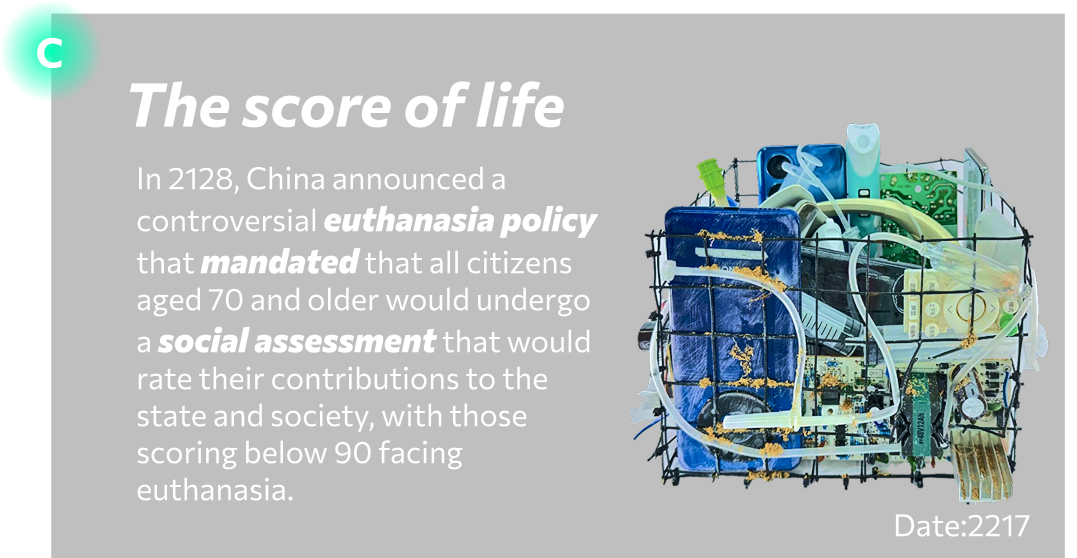
HOW DID I GENERATE AI VIDEOS?
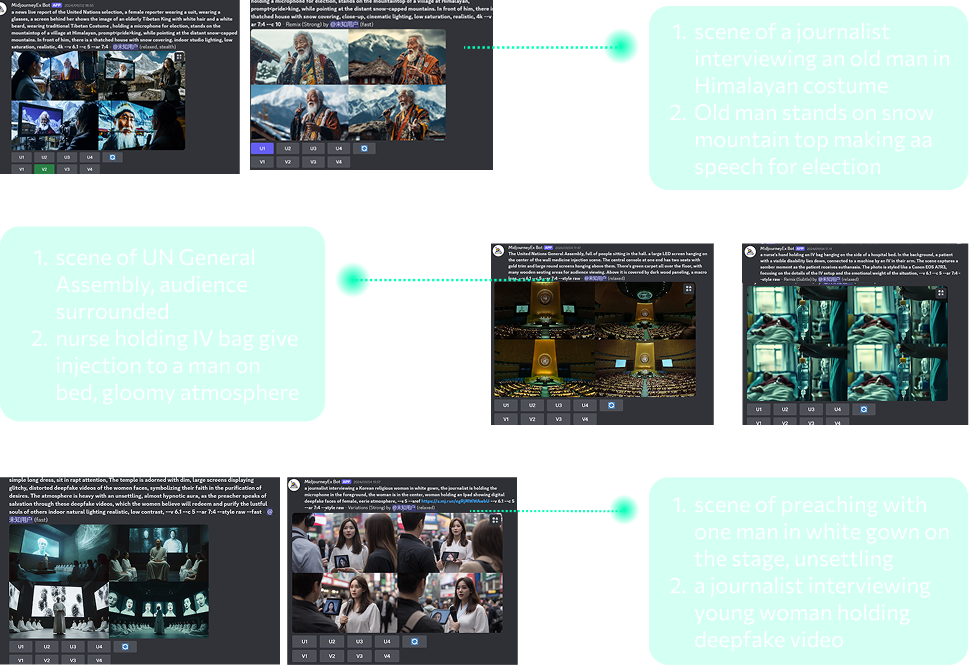
Step 1: MidJourney - generating news image
I set three news themes and use Midjourney to generate the keyframes of these news reports. Each news has two key frame generations, interview and scene shooting.
Step 2: Runway Gen
After getting keyframes of the fake news from Midjourney, we uploaded them to the AI video generation website to create short clips of around 10 seconds for each keyframe with keyword descriptions.

Step 3: TouchDesigner - visual effects
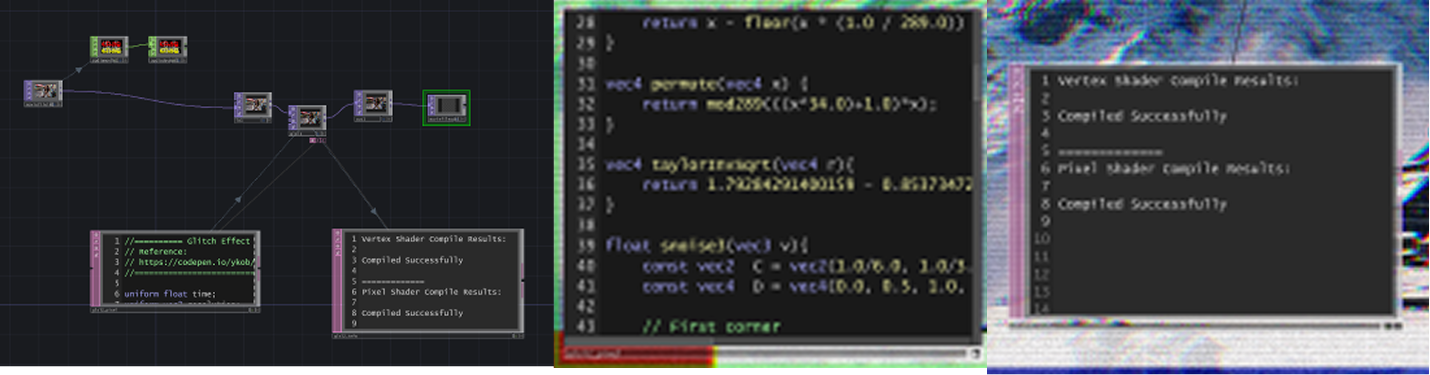
I use TouchDesigner to create layered glitch visuals by manipulating a single image with noise-driven switches, color ramps, and displacement effects. A shader using 3D simplex noise animates UV coordinates and samples textures to generate a dynamic glitching color effect.